
Picture this: a slick 90-second brand video hits your social feed. The color is cinematic, the music lands perfectly, and by the time it ends, you’ve already clicked the link. What you just witnessed wasn’t luck. It was the result of a disciplined, layered video production process that most viewers never think about, but every serious business absolutely should.
Whether you’re a Nairobi-based startup launching your first product, an established Kenyan corporation refreshing your brand story, or a small business owner experimenting with video marketing for the first time, understanding the video production stages is your first step toward making content that actually works. Not content that just exists, content that converts, connects, and commands attention.
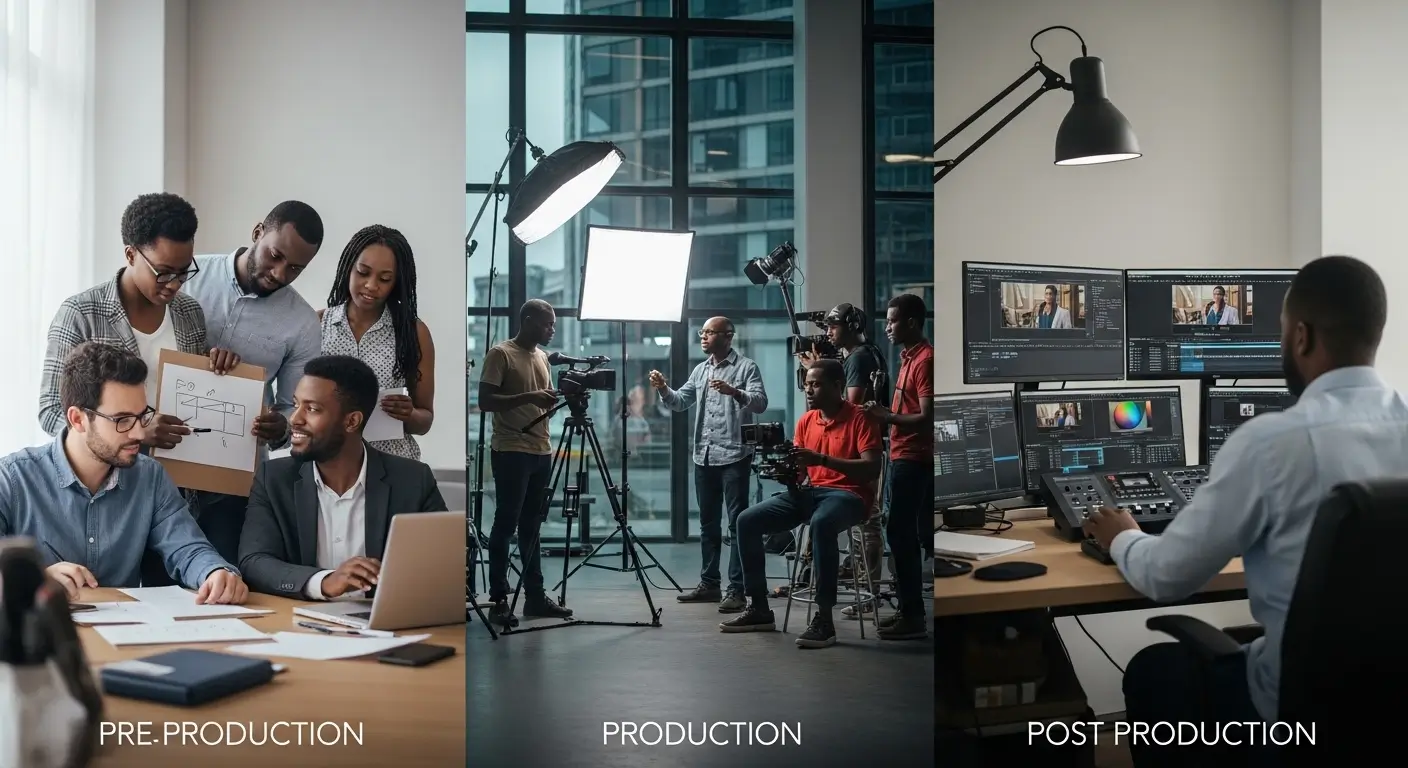
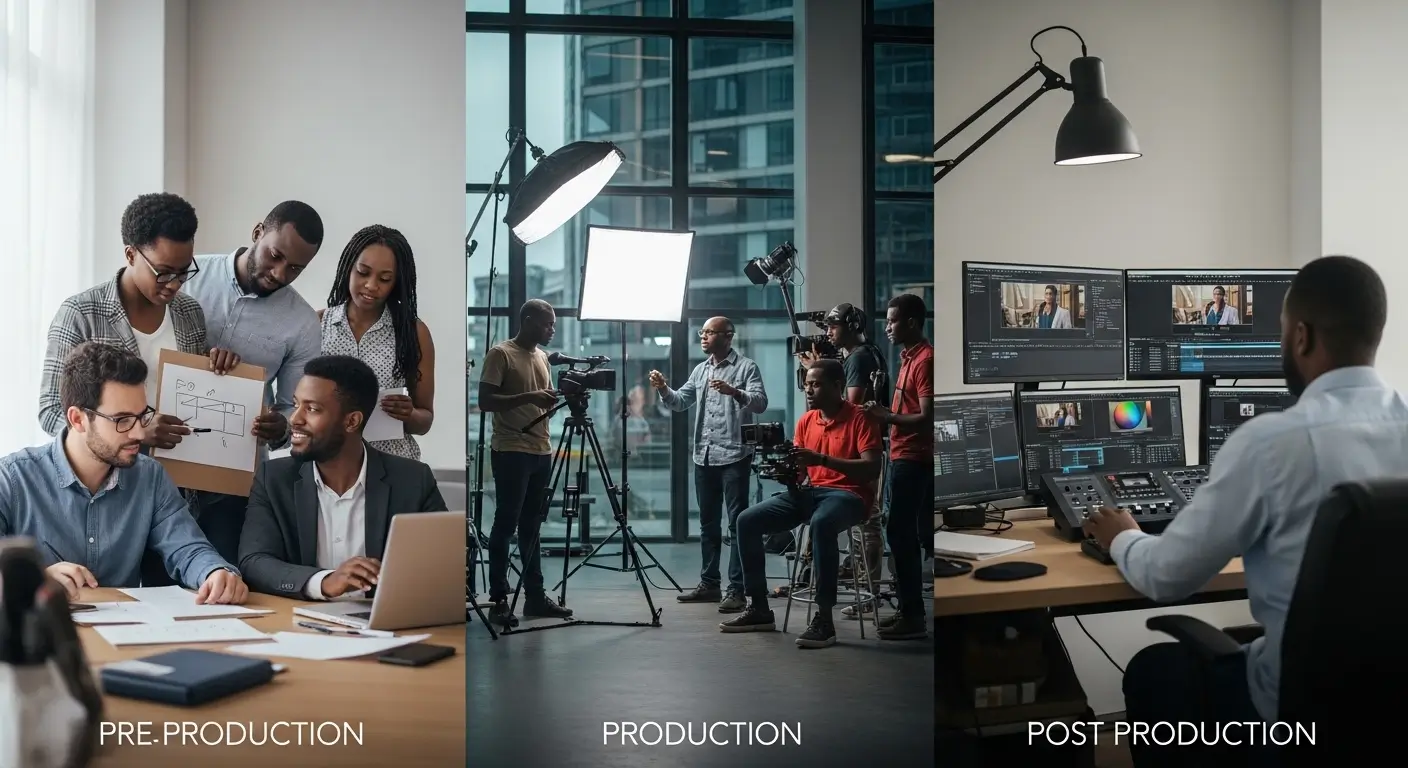
So, what are the main stages of video production? At the most fundamental level, there are three: pre-production, production, and post-production. But the full video production workflow is richer and more strategic than that tidy trio suggests. Let’s break it all down stage by stage, decision by decision so you walk away knowing exactly what it takes to go from idea to impact.

Stage 1: Pre-Production, Where Great Videos Are Actually Born
Here’s a truth that even seasoned filmmakers sometimes forget, the most important work on any video happens before a single camera rolls. Pre-production is the strategic backbone of the entire project, and shortchanging it is the single fastest way to blow your budget and timeline simultaneously.
Think of pre-production as the architectural blueprint of your video. You wouldn’t build a commercial property in Westlands without a detailed architectural plan, and you shouldn’t attempt a corporate video or any video without one either.
What Happens in Pre-Production?
The pre-production stage covers everything from conceptual development to the moment the camera rolls. Here’s what the process typically includes:
- Defining objectives: What is the video for? A product launch? Brand awareness? Staff training? The purpose shapes every subsequent decision.
- Scriptwriting and storyboarding: Your script is your blueprint. A storyboard, a visual shot-by-shot outline that translates the script into a shootable plan.
- Budgeting: This is where you figure out what’s financially realistic and where resources need to be allocated.
- Location scouting: Finding and securing the right shooting locations, whether that’s a studio in Industrial Area or a rooftop in Kilimani.
- Casting and crew assembly: Identifying the right talent both in front of and behind the camera.
- Creating a shot list: A detailed document listing every single shot planned for the shoot day. It’s the director’s tactical map.
- Scheduling and logistics: Coordinating call times, equipment, permits, and transport.
What Is a Shot List and Why Does It Matter?
A shot list is a comprehensive document that catalogs every shot required for a video project angle, focal length, action, dialogue cue, and estimated duration. It’s your production team’s GPS. Without it, you’re essentially improvising an expensive road trip without knowing your destination.
For business owners commissioning video content, reviewing the shot list before the shoot is a non-negotiable quality check. It ensures creative alignment between what you envisioned and what the production team intends to deliver.
Why Is Pre-Production Important?
Why is pre-production important? Because it’s where you catch problems before they cost you money. A missed location permit discovered on shoot day can derail an entire production. A poorly written script means a reshooting nightmare. According to industry professionals, every hour invested in pre-production saves three hours in post-production. That’s not just efficiency, that’s money in your pocket.
💡 Pro Tip for Kenyan Business Owners:
If you’re hiring a video production company in Kenya, insist on a detailed pre-production brief before signing off. A reputable agency will have a thorough process for this stage. Vague pre-production usually signals an equally vague final product.
Post a comment
Related Posts

April 15, 2026
What Is Video Production? A Complete Guide for Business Owners in Kenya
Discover what video production is, how it works, and why Kenyan businesses are using it…